Tissue image analysis has matured considerably as a field. Whole-slide imaging has become routine, deep learning-based segmentation is accessible to labs without computer vision expertise, and computational pathology workflows are increasingly integrated into translational research pipelines. But the rate at which tissue image analysis papers generate revision requests from methodologically rigorous reviewers has not declined — if anything, expectations have risen.
The sections that generate the most comments are consistently the same: image normalization, staining variability correction, segmentation parameter choices, and the relationship between the analysis pipeline settings and the specific biological readouts being reported. Getting these sections right before submission substantially reduces revision cycles.
H&E and IHC Require Different Normalization Strategies
A fundamental decision point in any tissue image analysis pipeline is how staining intensity variation is handled. H&E and IHC have structurally different sources of variability, and they require different normalization approaches.
H&E Staining Normalization
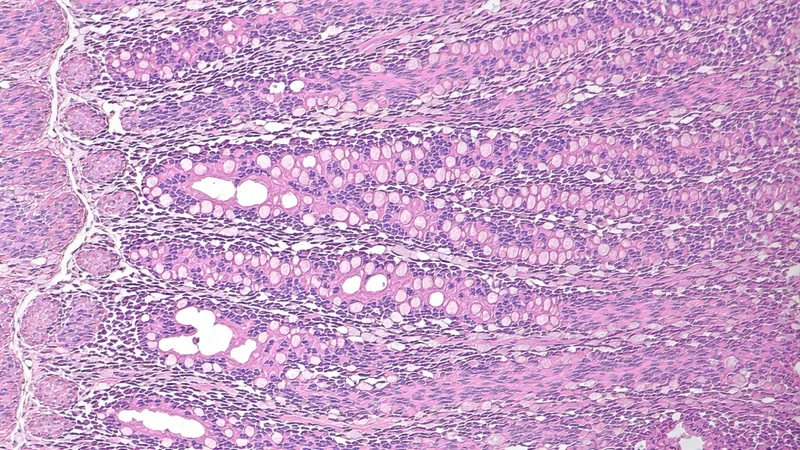
H&E staining variation arises from differences in staining protocol (reagent age, timing, reagent lot), tissue fixation quality, and section thickness. The color space of H&E images — typically stored as RGB brightfield images — contains correlated hematoxylin and eosin components that are not cleanly separable by channel. Color normalization methods for H&E address this by mapping the stain distribution of each image to a reference image. Macenko normalization and Vahadane normalization (both based on sparse non-negative matrix factorization of stain concentrations) are currently the most widely used approaches for this purpose and are well-documented in the literature. Reviewers familiar with computational pathology will expect one of these to be specified.
Reinhard normalization (a statistics-matching approach that transfers mean and standard deviation in LAB color space) is simpler but less reliable under large staining variability and is increasingly considered insufficient for publication-quality work. If your pipeline uses Reinhard normalization on H&E data, be prepared to justify the choice or switch to a concentration-domain method.
IHC Intensity Normalization
For IHC — typically brightfield chromogenic immunohistochemistry with DAB/hematoxylin counterstain — the primary quantitative readout is the optical density (OD) of the DAB signal, which is approximately linearly related to target protein concentration under consistent development conditions. The critical step is color deconvolution to separate the DAB channel from the hematoxylin channel. The stain vector used for deconvolution must be derived from the specific tissue and staining protocol being analyzed; using the default Ruifrok vectors published in 2001 without validation on your specific samples is a common source of review comments.
Validate your stain vectors by verifying that the deconvolved DAB image shows no residual hematoxylin signal in DAB-positive regions and vice versa. If cross-contamination is visible, re-estimate the vectors using tissue-specific training pixels.
Segmentation: Parameter Choices That Reviewers Notice
Segmentation is where the most analytically consequential decisions are made, and where methods sections are most commonly incomplete.
Nucleus Segmentation
For most tissue image analysis tasks, nucleus segmentation is the foundation. The choice of segmentation approach — classical threshold-based methods, watershed algorithms, or deep learning models — should be explicitly documented with the specific implementation (software name, model version, training data description if a pre-trained model was fine-tuned, and all relevant parameters). Reviewers at computational pathology-focused journals will ask whether the model was evaluated on held-out tissue from the same cohort or only on external benchmark data.
For deep learning-based segmentation (Cellpose, StarDist, and similar), state the model version and the channel order used as inputs. These models can produce substantially different results depending on input channel configuration, and reproducing the analysis requires this information.
Tissue Region Classification
If the analysis involves classifying tissue regions — tumor versus stroma, necrotic versus viable tissue, or specific histological structures — the annotation protocol for the training data must be described. Inter-annotator agreement (Cohen's kappa or equivalent) should be reported if more than one annotator contributed to the training set. This is increasingly a requirement rather than a recommendation at journals that publish computational pathology methods.
The Reproducibility Problem in Tissue Analysis
Consider a study examining tumor immune infiltrate quantification in a FFPE tissue microarray using CD8 IHC. The analysis pipeline uses color deconvolution to isolate the DAB channel, a watershed-based nucleus detector to identify DAB-positive cells, and a proximity threshold to classify cells as intratumoral or stromal. The results are used to stratify patient outcomes.
Reviewers at the target journal flag three issues: (1) the stain vectors used for deconvolution are not specified, (2) the proximity threshold for intratumoral versus stromal classification is reported as 50 µm but the method for determining this threshold is not described, and (3) the analysis was performed on a single whole-slide scan per case without reporting intra-case variability from different representative tissue cores.
None of these are exotic requirements. Each is a standard element of a reproducible tissue image analysis pipeline. Each can be addressed by adding two to four sentences to the methods section — if the underlying analysis was done properly. If the stain vectors were never validated, or the 50 µm threshold was chosen informally without a principled basis, addressing the review comments requires re-doing part of the analysis.
What Reviewers at Nature Methods and Similar Journals Now Expect
Based on published author guidelines and recent editorial commentary, the minimum methods section elements for a tissue image analysis paper now include: explicit software and version numbers for all analysis tools; all segmentation parameters necessary to reproduce the result; normalization method with reference to its original publication; image acquisition parameters including scanner model and magnification; quality control criteria used to exclude slides or regions; and availability of the analysis code or a deposited workflow that can be run on example data.
We are not saying that a rigorous methods section is sufficient to get a paper accepted — the biology still has to be sound. But an incomplete methods section at a venue that has invested in quantitative imaging standards is a reliable route to a lengthy revision cycle. Reviewers who specialize in computational pathology read methods sections before results sections, because they know that the conclusions of a tissue image analysis study are only as reliable as the pipeline that produced the measurements.
Code Availability and Pipeline Depositing
The expectation of code availability has shifted from optional to essentially standard at methods-focused journals. The practical implication is that analysis pipelines need to be written and managed as reproducible artifacts from the beginning, not reconstructed from lab notebooks at submission time.
This means: version-controlled analysis scripts (Git or equivalent), documented dependencies (Python environment files, ImageJ macro versions, MATLAB toolbox versions), and a test dataset sufficient to verify that the pipeline runs and produces expected outputs. The investment in making the pipeline reproducible before submission is substantially less than the investment in reconstructing it during revision — and it protects the analysis from post-publication concerns about reproducibility.
Tissue image analysis produces some of the most compelling biological data in modern cell biology and translational research. The methods that generate that data deserve the same rigor as the experimental biology. Building reproducibility into the pipeline from the design stage is not a regulatory burden — it is what separates publishable work from data that cannot be defended when a reviewer examines it carefully.